


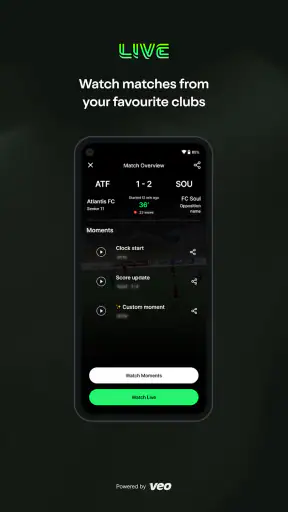
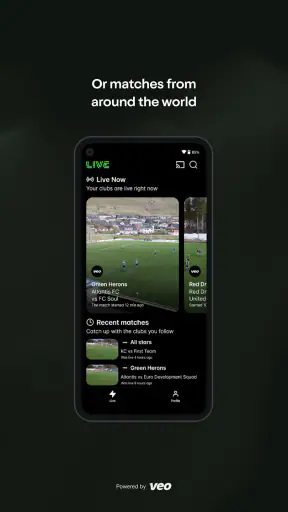
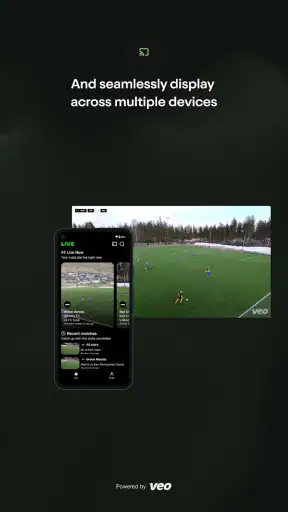
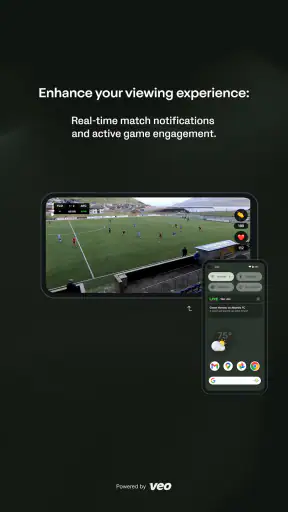
I approached Veo as a practical sports companion rather than another app I would open once and forget. Developed by Veo Technologies, it is built around a simple promise: bring matches, statistics, and streams together in one place. That focus matters because the app is not trying to replace every sports tool on a phone. Its value depends on whether you regularly follow recorded or streamed team matches and want a more organized way to revisit them.
My first impression was that Veo makes the most sense when it is connected to an ongoing sporting routine. A player can use it to look back at a match, a coach can review moments with a team, and a family member can follow games without relying entirely on messages or scattered video files. It is free to install, rated for Everyone, and belongs in the sports category, so the barrier to trying it is low. The more important question is whether it remains useful after the initial curiosity disappears.
From an appealing first week to a useful monthly habit
The first week with an app like this naturally feels rewarding because it puts several kinds of match information side by side. Instead of treating a game as a single video that ends when the final whistle goes, Veo encourages me to think about the match as something I can return to. A stream helps with live or near-live viewing, while statistics give the result more context. That combination is more useful than a basic camera-roll recording, especially when I want to find meaning in a performance rather than simply watch the whole game again.
A realistic example is a weekend youth or amateur match. I might miss the opening because of work, watch part of the stream later, and then use the available match information to understand how the game developed. On another day, I could revisit a particular passage with a player and talk about positioning or decision-making. The app becomes more valuable here because the same match serves different purposes for different people: entertainment for supporters, reflection for players, and preparation for coaches.
That shared usefulness is one of Veo’s strongest ideas. A normal messaging app may be convenient for sending a short clip, but it is not designed around the match as a complete event. A generic video platform may handle playback well, yet it can separate the recording from the surrounding sporting context. Veo sits between those options by keeping the attention on the game itself. I would not choose it simply because I need somewhere to store random videos; I would choose it because matches are the center of my viewing habit.
The app’s public reception also suggests that it has reached a meaningful audience. It has an average rating of 4.4 from around 8 thousand ratings and has passed 1 million installs. Those figures do not tell me that every team will love it, but they do make it easier to take seriously as an established sports app rather than a short-lived experiment. The developer’s specialization in this area also gives the product a clearer identity than a general-purpose recording service.
During the first week, I would recommend setting a small routine instead of trying to use every part of the app at once. Watch one match, return to it after a day, and decide whether the statistics actually change how you understand the game. If they do, the app has a chance of becoming part of a real workflow. If I only want a quick score or a casual highlight, the extra structure may feel unnecessary.
One useful habit is to separate viewing from review. I can watch the match as a supporter first, then return later with a more analytical purpose. That prevents the statistics from turning the first viewing into homework. It also makes the app more flexible: the same content can support an emotional match-day experience and a calmer post-match conversation without requiring two different services.
Another practical advantage appears when several people care about the same match but not in the same way. A coach may be interested in team shape, a player may want to examine a personal decision, and a parent may simply want to see the game they missed. Veo’s focus on matches, stats, and streams gives each person a reason to return. That is more durable than novelty because the app can fit into different roles around one sporting event.
Where the recurring value comes from
After the first month, the question changes from “What can this show me?” to “Will I keep using it?” In my view, the answer depends on the rhythm of the team or competition. If matches happen regularly and the app consistently gives me something to review, it can earn a permanent place on my phone. Each new game creates another reason to open it, and older matches can remain useful when comparing progress or discussing a recurring problem.
The strongest long-term use is not endless replay. It is selective return. I might watch a full match once, then revisit only the sections that matter to a training discussion. I might compare a recent performance with an earlier one, not to create a formal record but to notice whether a tactical adjustment is working. This is where Veo feels more purposeful than a simple stream player: it supports a continuing conversation around matches rather than treating every game as disposable content.
There is also value for people who cannot attend every fixture. A supporter with work commitments, a relative living in another city, or a player recovering from an absence can use the app to stay connected to the team’s activity. That does not fully replace being at the venue, but it is a practical alternative to depending on second-hand summaries. The stream preserves the feeling of watching the event, while the statistics help fill in the parts I may have missed.
For coaches, the monthly benefit is tied to preparation and feedback. A match can become material for a later session instead of a memory that fades by the next training day. The important trade-off is that the app is most valuable when someone is willing to turn viewing into action. If nobody discusses the match, identifies lessons, or uses the information to guide future work, the archive can become passive storage.
I would therefore judge Veo by the quality of the routine around it, not by how often I open it casually. A team that schedules a short review after fixtures may get much more from it than an individual who installs it only to watch occasional streams. The app can support a habit, but it cannot create commitment by itself. That distinction is important when deciding whether it deserves lasting space.
The current version is 1.15.5.121, and the app requires Android 10 or later. For someone using a newer phone, that requirement should not be a serious obstacle. For a team relying on older devices, however, compatibility is worth checking before making the app part of a shared routine. A sports workflow is only dependable when the people who need it can access it without having to replace their hardware first.
The maintenance work I would expect
Veo is not a completely passive app. Its usefulness depends on keeping the match flow organized and returning at the right time. I would need to remember when a game is available, make space for viewing or review, and decide what deserves attention. That is a lighter burden than manually collecting videos and statistics from several places, but it is still a burden. People who want a sports app to deliver one quick answer and disappear may find this level of involvement excessive.
The maintenance is also social. A coach, player, or supporter may each have a different reason for using the same match. If nobody agrees on when to review a game or what to look for, the app risks becoming another unused account on everyone’s phone. The best approach is to establish a simple rule, such as reviewing one match before the next fixture or discussing a small number of moments rather than trying to analyze everything.
That restraint matters because too much information can weaken a good tool. Statistics are helpful when they answer a question. They are less helpful when I browse them without knowing what I am trying to learn. I would use Veo to investigate a performance, prepare a conversation, or catch up on a missed game; I would not open it repeatedly just to search for something interesting.
Storage and attention are practical considerations too, even when the app itself is free. A free download does not make every surrounding habit effortless. Long match viewing takes time, and repeated review can compete with training, family commitments, or other sports coverage. I would recommend deciding in advance whether I need the full stream, a focused review, or only the match information. That choice keeps the app from turning every fixture into a major time commitment.
The age rating of Everyone makes Veo approachable for a broad audience, particularly families and community teams. In practice, adults may still need to guide younger users toward sensible viewing habits and respectful discussion of performance. The rating describes accessibility, not the quality of the conversation that happens around a match. Used well, the app can encourage constructive review rather than turning statistics into a way to single out one player.
Why the novelty may wear off
The biggest source of fatigue is repetition. After the excitement of the first few streams, I may discover that not every match deserves a full replay. A close game, a difficult performance, or an important tactical question can justify returning. A routine fixture with little to discuss may not. If I treat every available match as mandatory viewing, the app can start to feel like another obligation.
There is also a risk of confusing quantity with insight. Having access to match information does not automatically make me a better analyst. Statistics can highlight patterns, but they still need context. A number may look positive or negative until I consider the opponent, the game state, the player’s role, and what the team was trying to do. Veo is more rewarding for users who are comfortable asking those follow-up questions.
Another possible frustration comes from expectations. Someone looking for a broad sports hub with news, scores from many competitions, fantasy tools, or general entertainment may find Veo too focused. It is not the right substitute for a mainstream sports-news app. Likewise, a person who only wants to record informal games with a phone may prefer a simpler camera workflow. Veo earns its place when the match itself is part of an organized viewing and review process.
I also would not recommend making it the only way a team communicates. Match viewing and statistics are its natural center, but scheduling, announcements, training plans, and personal conversations may still belong elsewhere. Trying to force every team activity into one sports app can create unnecessary friction. Veo works better as a focused layer for match content than as a complete replacement for all team tools.
For supporters, the trade-off is between depth and convenience. A quick message from a friend may tell me the score faster than opening a dedicated app. Veo becomes worthwhile when I want more than that quick update—when I want to watch, revisit, and understand the game. If my interest ends with knowing who won, the app may be more than I need.
Who should keep it installed?
I would keep Veo installed if I regularly follow a team whose matches are available through the service, or if I am involved in reviewing performances. Players who learn well by watching themselves can benefit from returning to real match situations instead of relying only on training drills. Coaches can use the match as a shared reference point. Families and supporters gain a more dependable way to catch games they cannot attend.
I would be more cautious for someone who watches sports only occasionally. The free price makes trying it easy, but lasting value still depends on repeated access to relevant matches. A person who follows many unrelated sports may prefer a broader platform, while someone who wants instant news may be happier with a live-score app. Veo’s specialization is its advantage and its limitation at the same time.
Before committing to it as part of a team routine, I would check three practical things: whether the people who need access use compatible devices, whether they genuinely want streams and match review, and whether someone is prepared to keep the habit alive. Those checks are more useful than judging the app from one impressive first session. A tool can be well designed and still fail when nobody has a reason to return.
My most effective workflow would be simple. I would watch a match without trying to analyze every detail, make a short note about one question that remains, and return later to investigate that question with the available match information. Then I would discuss one or two observations with the relevant people. This approach turns Veo from a content library into a practical learning loop and avoids the fatigue of endless replay.
It is also worth remembering that free access changes the decision. I do not have to justify a subscription before testing whether the app fits my team or viewing habits. I can try it during a normal match cycle and judge the result by the time it saves, the conversations it improves, and the occasions when it lets me stay connected. If those benefits do not appear naturally, uninstalling it is a reasonable conclusion rather than a failure.
Veo has been available since March 31, 2022, which gives it enough history to feel like a continuing product rather than a brand-new curiosity. Its 104 reviews and broad install base show that people are paying attention to it, while the 4.4 average suggests generally positive experiences. I would treat those signals as encouragement to try it, not as a guarantee that its focused approach will suit every sports fan.
My long-term verdict
In the long run, I think Veo earns its space when matches are part of a recurring community: a team, a club, a family of supporters, or a coaching routine. Its combination of streams and statistics gives the same event more than one life, and that is the foundation of its lasting value. I can watch a game, revisit it, and use it as a shared reference instead of letting it vanish after the final whistle.
Its limitations are equally clear. The app asks for attention, organization, and a reason to review. It may feel unnecessarily specialized for casual fans, and it cannot replace every other sports or communication tool. The free installation removes much of the financial risk, but it does not remove the time cost or the possibility of information fatigue.
My recommendation is to keep Veo if it changes what you do with matches, not merely where you watch them. If it helps you catch games, prepare better discussions, or notice progress over time, it has genuine recurring value. If you only need occasional scores or a general sports feed, a simpler alternative will probably serve you better. For the right user, though, Veo is not just a stream viewer; it is a practical way to make a match remain useful after it ends.


